340 thousand views on Instagram, but nobody chose this photo for their wall
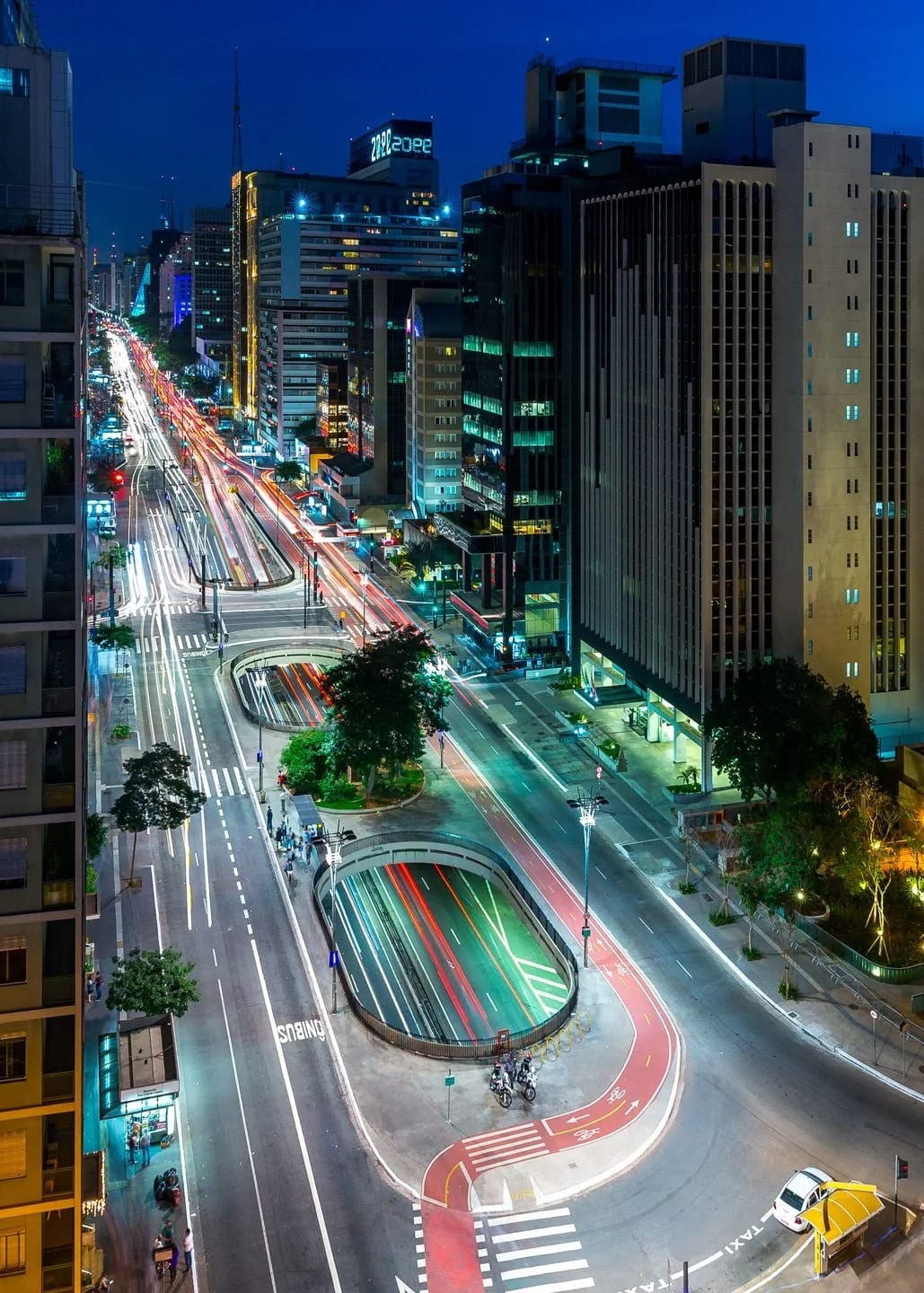
Let me introduce you to two of the photos that taught me the most about the difference between the screen and the wall.
The first one had 340 thousand views and a thousand shares on Instagram. In all that commotion, not ONE person asked if they could have the image at home. The second one had 13 thousand views, and today it hangs in one of São Paulo's top restaurants, in the hall of a residential building in Jardins and in the homes of collectors.
I live on both sides of this conversation: I am a fine art photographer, 128 thousand people follow my work on Instagram, and my limited edition works are in collections around the world. And if there is one thing these two worlds have taught me, it is that they run on different clocks.
The feed competes for 0.3 seconds against a moving thumb. The wall competes for decades against the same person, who will see that image ten thousand times: at breakfast, coming home tired from work, on a hungover Sunday. They are different sports. And the most common mistake of anyone choosing art is judging the second competition by the criteria of the first.
What makes a photo work printed in large format
The image that wins the scroll has instant readability: high contrast, color that screams, ONE point of interest you understand before the thumb moves on. It needs all that, because the screen is small and the time is close to zero.
Now, the counterintuitive part: what may look like clutter on a small screen often becomes an important detail of the composition in large formats. It is not that the wall asks for mess, quite the opposite, a clean composition is still the foundation. But a large format has space and time the screen does not, and layers that would get lost on a phone find their place: they invite the eye to wander, reflect and, with luck, discover a new detail day after day. It is the difference between the catchy single and the record that grows with every listen: the first wins the first play, the second wins the year.
The right image for your wall is the one that survives, and rewards, the ten thousandth look.
The post with 340 thousand views that nobody asked to put on a wall
In March 2026, I photographed tiger sharks in Ilha Grande Bay, in Angra dos Reis, on a science project with Instituto Pro Shark. The post was a rocket: 340 thousand views, a thousand shares, compliments on the images.
Inquiries about having one on a wall: zero.
And today I understand why. That post performed as NEWS. Tiger sharks in one of the world's top sea destinations is a headline, and headlines get shared, commented, sent to the family group chat. But a headline is not something you live with. The merit belonged to the fact, not to the fit with anyone's home.
On the other side, my photo of Avenida Paulista: a long exposure at blue hour, from an unusual angle, with car lights turning into rivers of light. On the feed, it went almost unnoticed: 13 thousand views and 70 shares, a reach 96% smaller than the sharks'. Too quiet for the small screen.
But this image speaks to something else. Not to curiosity, but to belonging: that sweet ache Caetano Veloso immortalized in Sampa, the thing that happens in the heart of anyone who carries the city inside. The paulistano who sees it does not think "how interesting". He thinks "that is me".
The result: Circuito Paulista was chosen for Ristorantino, Ricardinho Trevissani's restaurant, one of the finest in São Paulo (worth the double visit: see the work in person and, while you are at it, taste some of the best food in the city). It went to the hall of a residential building in Jardins. And it entered private collections.
The feed measures astonishment. The wall measures belonging. And it is almost never the same photo that wins both.
A backstage confession: my catalog has always worked on organic demand. An image only becomes a limited edition when collectors ask for it; the collection is a record of real desire, not a portfolio of what I find beautiful. The sharks had never entered. Well: I just broke my own rule and added to the catalog the quietest reading of that series, the work Tensão de Superfície. The post proved the image stops the scroll; now I want to find out if it also knows how to live with someone. In a year I will come back and tell you the result.
Vertical on Instagram, horizontal on the wall: the math that does not add up
There is a format asymmetry nobody tells you about when you are choosing art, and it distorts your eye without you noticing.
On Instagram, a vertical post takes up almost the entire phone screen. A horizontal one becomes a squeezed strip in the middle. More pixels hold the thumb longer, so the algorithm, in practice, punishes the horizontal format. Years ago I adopted an editorial rule because of this: on my feed, the square is the limit. And even so I rarely use it.
Now look at your home. The wall behind the sofa. The headboard. The sideboard in the living room. The large spaces that call for art are, mostly, horizontal. In my collection, I estimate that 80% of the works chosen by collectors are horizontal.
In other words: the format the algorithm rewards is the one your home asks for the least. I publish my work compressed, on the screen, while it lives stretched out on walls. And your eye, trained by years of scrolling, was calibrated on a geometry that is not the one in your living room.
This is not a law, it is a statistic. Circuito Paulista itself is vertical, because Paulista is a canyon of buildings and there the format IS the subject. The real criterion: the format must serve the image and the space, never the algorithm.
How to choose photography for a large wall
After years of watching works enter collections (and posts blow up without becoming anything), my kit of criteria for anyone choosing:
The non-negotiable: an emotional connection with what is in the image. It can be the place that lives in you, the subject that touches you, or that somewhat mysterious positive feeling a shape or an aesthetic awakens that you cannot quite explain. Without it, the technique does not matter: do not buy.
The questions of the decades test: does this image give my eye somewhere to wander? Is there a second reading I only notice later? Do the colors live with the room or fight it? Could I stand looking at this on my worst day?
And the help your imagination needs: none of us is good at picturing an image from a phone screen taking up a meter and a half of wall. It is a jump in scale that fools even professionals. That is why I consider the mockup, the simulation of the work in your real space, a decision tool, not a luxury. Seeing before deciding changes everything.
Is limited edition photography worth investing in?
Honest answer from someone who lives on it: it depends on what you expect.
What a limited edition truly guarantees: contractual scarcity (each format has a closed, numbered run; once it ends, no more prints) and provenance (a signed certificate of authenticity, with paired holograms between work and certificate). This protects what you acquired.
What it does NOT guarantee: automatic appreciation. Photography can appreciate as art, and there are notable cases, but treating that as a promise would be dishonest. The right order is another: choose first with your eye and your connection, and let the financial thesis be a consequence, never a motive.
Deep down, the most guaranteed return is a daily one: living with an image that still gives you something in the tenth month.
The final test
Of all the criteria, the most reliable is the simplest, and it is not in any manual:
The right work is the one that makes your heart race when friends arrive at your home, because you know they are about to see it.
If the image you are courting passes this imaginary test, you can trust it. If its charm was the headline, your thumb already knew before you did.
Next time a photo stops you on the feed, ask the two clocks question: do I want to look at this for ten years?
And if you want to put it to the test in your own space, we prepare a personalized mockup with the work on your wall, free of charge and with no commitment. Just reach out.